Have your chimney inspected once a year, and swept when the inspection says it needs it. The Chimney Safety Institute of America (CSIA) follows NFPA 211, which says chimneys, fireplaces and vents should be inspected at least once a year. That applies even if you only light a fire a few times a winter, and it applies to gas fireplaces too.
Los Angeles winters are mild, so it is easy to forget the fireplace until the first cold, wet week. This guide covers how often to schedule a sweep, what creosote does, the signs that say it is time, what the inspection levels mean, and how rain and chimney caps fit in.
How often should you have your chimney cleaned?
The answer has two parts. The inspection is yearly. The sweep happens when the inspection finds buildup that needs removing. NFPA's heating safety guidance says to have chimneys cleaned and inspected every year by a qualified professional, ideally before you start using the fireplace for the season.
CSIA gives a measure for masonry fireplaces: sweep at 1/8 inch of sooty buildup, and sooner if there is any glaze present. For factory built fireplaces, CSIA says to sweep when any appreciable buildup occurs, because the deposit is acidic and can shorten the life of the fireplace.
How much you burn changes how fast it builds up. A household that burns a fire most evenings can reach that point in one season. A household that burns a few times a year may not, but the inspection is still worth doing, because CSIA notes that animals may nest in the flue and parts of the system can deteriorate while it sits unused.
You can read more on this in CSIA's homeowner resources. For the rest of your home's seasonal list, see our HVAC maintenance checklist for Los Angeles homeowners.
Want a straight answer on your system?Most repairs can be estimated free over the phone. Open 24 hours Sunday to Thursday, Friday 9 AM to 3 PM.
Call (310) 469-1979What is creosote and why does it cause chimney fires?
Creosote is the black or brown residue left behind when wood smoke cools in the flue and condenses on the inside walls. CSIA describes it as taking different forms: crusty and flaky, tar-like and sticky, or shiny and hardened. Often more than one form shows up in the same chimney.
It matters because creosote is flammable. A hot fire in a chimney with enough buildup can ignite it, and the fire burns inside the flue where you may not see it. CSIA puts it simply: clean chimneys do not catch fire.
The hardened, shiny form is called glazed creosote. CSIA describes it as a hard or tacky layer of flammable creosote that cannot be removed by normal mechanical brushing. A qualified professional may use chemical cleaners to change the layer so it can be removed, though CSIA says such cleaners should never be considered adequate on their own. Glaze is a reason to schedule sooner, which is why CSIA's sweep guideline mentions it separately.
CSIA also lists signs that a chimney fire has already happened, even if no one noticed it. A sweep looks for puffy or honeycombed creosote, creosote flakes on the roof or ground, cracks in exterior masonry, smoke marks at mortar joints, and a discolored or warped rain cap. If you see any of those, do not use the fireplace until it has been inspected.
What are the signs you need your chimney swept?
Some signs are visible and some are not. Book an inspection if you notice any of these:
The fireplace smokes into the room, or the fire is hard to start and does not draw well.
A strong, smoky or tar like smell comes from the fireplace, especially on humid or rainy days when the odor gets worse.
Black, flaky or shiny buildup on the damper, the firebox walls or the smoke shelf.
Water stains on the ceiling or walls around the chimney, or water dripping in the firebox after rain.
A rusted, bent or missing chimney cap.
Birds, nest material or other debris in the flue, or sounds from the chimney.
Pieces of mortar, brick or flue liner in the firebox.
It has been a full year, or a season of regular burning, since the last inspection.
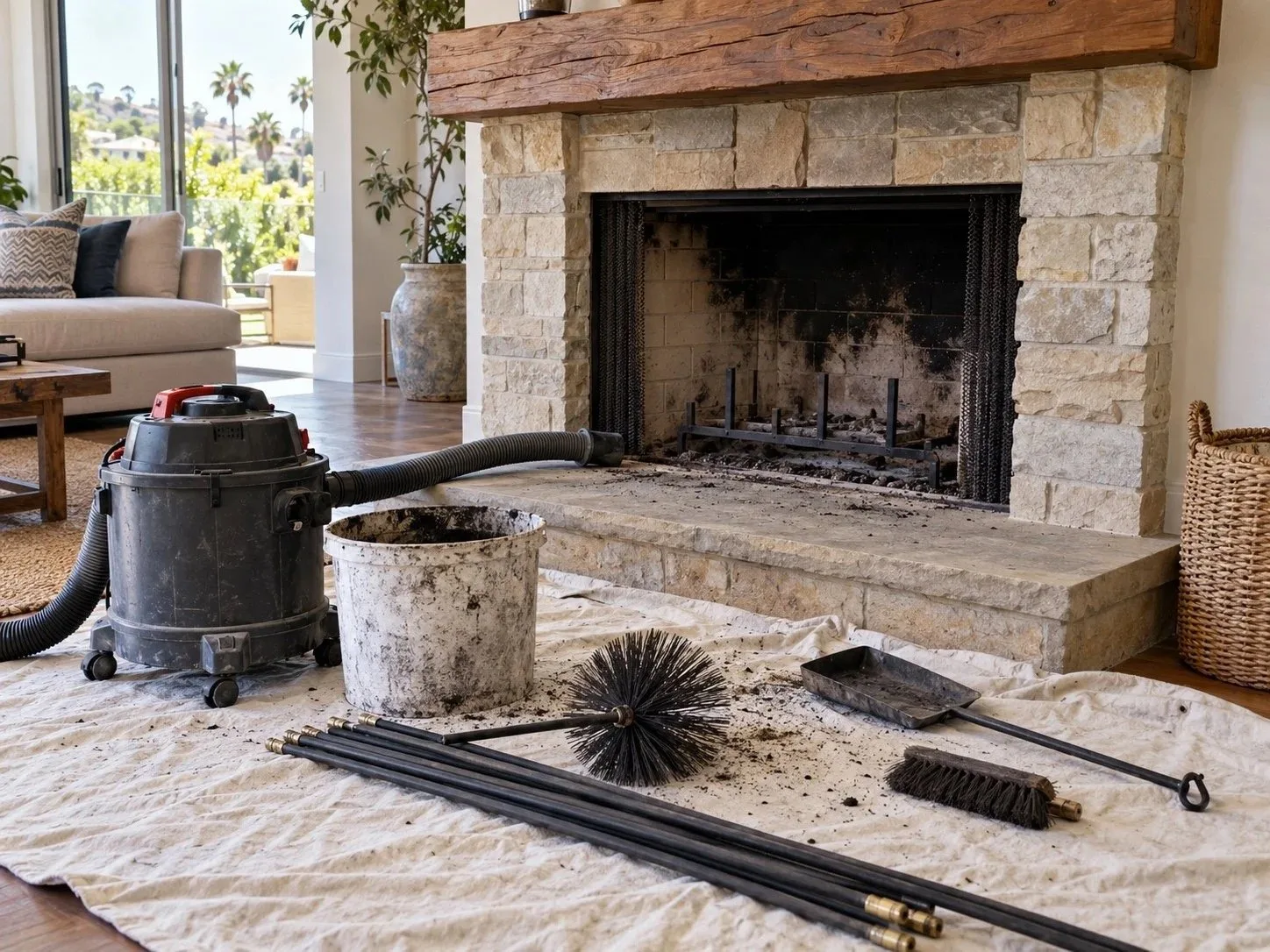
If you want a sweep and inspection from a licensed crew, our chimney cleaning service uses rods and brushes to clean the flue, and you get a written quote before we start.
What are the chimney inspection levels?
NFPA 211 describes three levels of inspection. CSIA follows them.
Level 1 is the routine yearly check of the readily accessible parts of the chimney, the appliance and the flue. It confirms the structure is sound and the flue is free of obstructions and combustible deposits such as creosote. This is the one most homeowners need each year.
Level 2 goes further, into accessible attics, crawl spaces and basements. It is typically used when a property is sold, when the system is changed or relined, or after something suggests a problem.
Level 3 involves opening up parts of the building or chimney to reach concealed areas. It is only recommended when a hidden hazard is suspected.
Wood fireplace or gas fireplace: do both need cleaning?
Both need an inspection. Gas burns cleaner, so it does not build creosote the way wood does. Even so, CSIA says to schedule annual inspections for all your chimneys, gas furnaces included, because bird nests and debris can block a gas flue and the chimney can stop working properly.
With a wood fireplace, add the sweep to the inspection. Lighting a fire for holiday guests? Run through our fireplace safety check for LA homes first.
Why seasoned wood matters
Burn only well seasoned wood, which means wood that has dried for a good while. CSIA says unseasoned wood produces cooler smoke, and cooler smoke deposits more creosote. Restricting the air supply has the same effect, so do not close the damper or air controls too far to make a fire last longer.
CSIA's rule is short: only well seasoned wood goes in the fireplace.
Rain season, leaks and chimney caps
Los Angeles gets most of its rain in a few big storms, and an uncapped or damaged chimney lets it straight in. CSIA says water does more damage to masonry chimneys than fire does. It can lead to broken brickwork, rotted wood, cracked flue liners and damaged heating equipment, and the damage is usually slow enough to be ignored until it becomes serious.
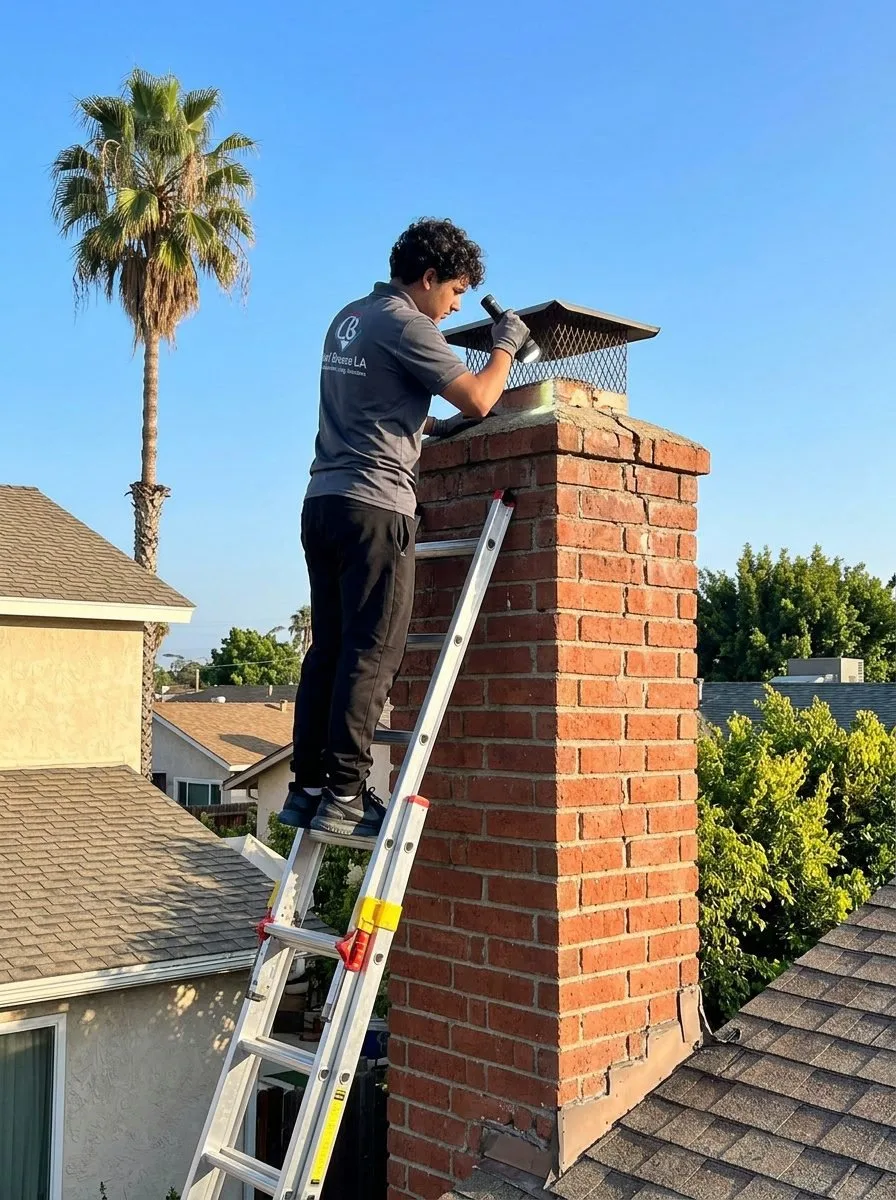
A chimney cap helps. CSIA says a well designed cap keeps out rainwater and stops birds and animals from entering and nesting in the chimney, and it also acts as a spark arrestor. That makes a rusted, loose or missing cap one of the first things worth fixing before the rainy months.
If you see water in the firebox, rust streaks, or stains near the chimney, get it looked at before the next storm. Our chimney cap installation covers replacing a damaged or missing cap, and a chimney inspection will show whether the leak comes from the cap, the flashing or the masonry.
Common questions
How often should you have your chimney cleaned?
Have it inspected once a year, and cleaned when the inspection shows buildup. CSIA recommends sweeping a masonry fireplace at 1/8 inch of sooty buildup, and sooner if there is glaze. Heavy use means you may need a sweep every season.
Do I need a chimney inspection if I rarely use my fireplace?
A chimney needs a yearly inspection even if you rarely use the fireplace. NFPA 211, as CSIA describes it, calls for yearly inspection, and CSIA notes that animals may nest in a chimney and the system can deteriorate even when it sits unused.
Does a gas fireplace need to be cleaned?
A gas fireplace needs an inspection, though it will not build creosote like wood. CSIA advises annual inspections for all chimneys, gas included, because nests and debris can block the flue.
What does a chimney fire look like?
Some chimney fires are quiet and go unnoticed. Signs include puffy or honeycombed creosote, flakes on the roof or ground, cracked masonry, smoke at mortar joints and a discolored or warped cap. If you see these signs, stop using the fireplace and call for an inspection.
Can I clean the chimney myself?
The flue needs a proper inspection to see what is in it. Glazed creosote cannot be removed by normal brushing, which is one reason CSIA recommends a certified sweep each year.
Book your inspection before the next storm
Cool Breeze LA serves Los Angeles County and the San Fernando Valley with same day service and a written quote before work starts, and we are licensed under CSLB #1154105. We are open 24 hours Sunday to Thursday and Friday from 9 AM to 3 PM, and closed Saturday. Call (310) 469-1979 or schedule online.