A chimney leaking when it rains almost always has one of four causes: a missing or rusted cap, a cracked crown, failed flashing where the chimney meets the roof, or masonry that has soaked up water over the years. Water coming into the fireplace or down the wall after a storm is a sign to get the chimney looked at before the next one, and not to light a fire in the meantime.
Los Angeles goes months without rain and then gets a heavy week, so small cracks and worn seals that never showed up in summer suddenly show up in the living room. This guide covers the causes, what to do tonight, what a professional checks and what to ask for when you call.
Why is my chimney leaking when it rains?
Water gets in at a short list of places, and each one leaves a slightly different clue.
A missing, rusted or loose chimney cap
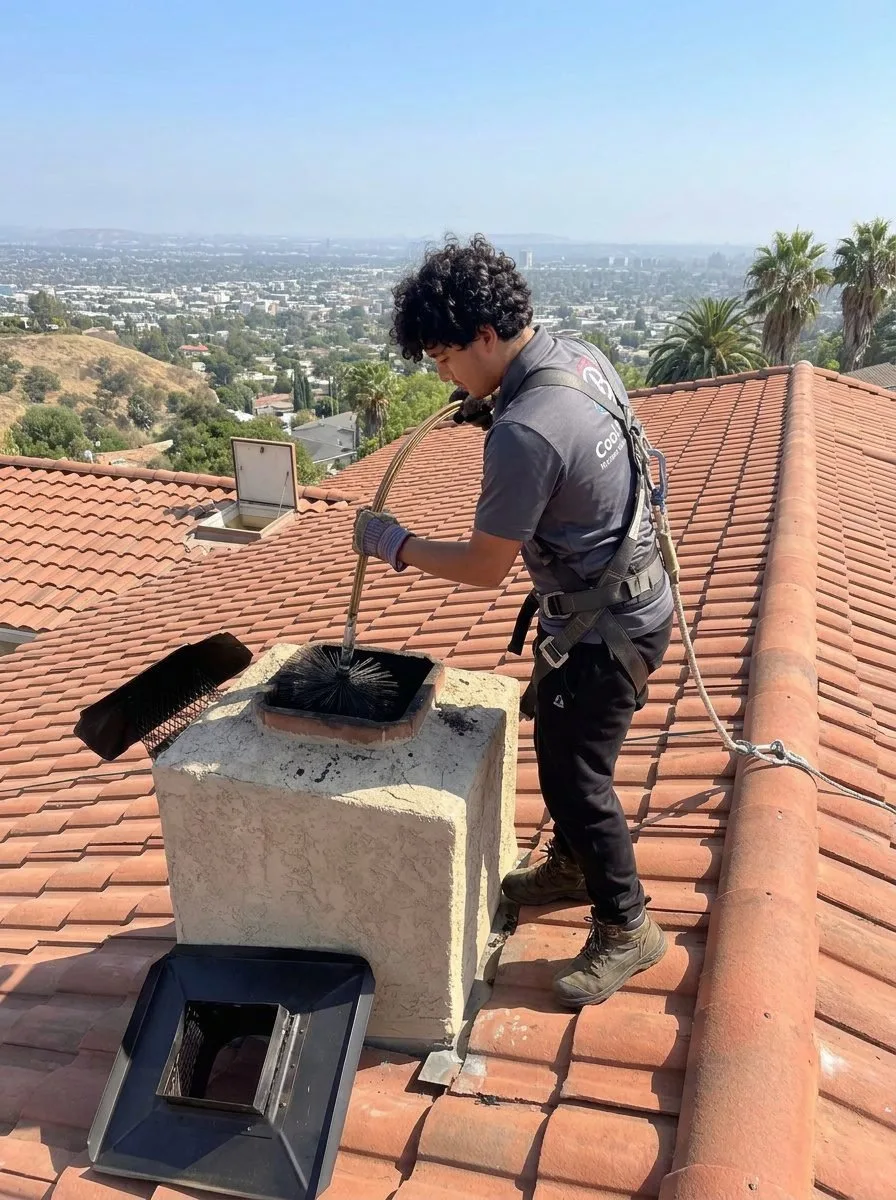
The cap sits on top of the flue and keeps rain out of the opening. The Chimney Safety Institute of America (CSIA) says a well designed cap keeps out rainwater and also stops birds and animals from entering and nesting in the chimney. When a cap is gone, bent or rusted through, rain drops straight down the flue. The clue is water in the firebox, a wet damper, or rust on the damper and the metal parts of the fireplace.
A cracked or crumbling crown
The crown is the slab across the top of the chimney that closes the gap between the flue liner and the outer wall. CSIA's chimney fires white paper says its job is to shed rainwater clear of the chimney and prevent moisture from getting in, and that failed or inadequate crowns are among the more common causes of chimney deterioration. The same paper notes that many crowns are only a thin layer of mortar, which weathers poorly and cracks. Water from a cracked crown soaks into the bricks below, so the clue is often a damp patch on the chimney wall inside the house or in the attic.
Failed flashing
Flashing is the metal seal between the roof and the chimney. CSIA describes it as the seal that keeps rain water from running down the chimney into living spaces, where it can damage ceilings and walls and rot rafters and joists. Flashing leaks when the metal rusts, lifts, or the sealant around it dries out and splits. The clue is a water stain on the ceiling or wall near the chimney, which often shows up only during a hard rain.
Bricks and mortar that absorb water
CSIA says common brick is like a sponge, absorbing water and wicking moisture toward the chimney interior, and that defective mortar joints or the wrong mortar or brick can make that worse. This kind of leak is slow, and the damp patch can appear days after the rain.
Want a straight answer on your system?Most repairs can be estimated free over the phone. Open 24 hours Sunday to Thursday, Friday 9 AM to 3 PM.
Call (310) 469-1979Is it a leak or condensation?
Sometimes the moisture is not rain at all. When a heating appliance, gas fireplace or wood fire sends warm flue gases up a cool chimney, the gases can condense on the inside of the flue. CSIA's white paper describes wet staining and white mineral deposits on the exterior chimney wall or on adjacent interior walls as the most common outward sign of condensate damage.
A few questions help sort one from the other. Does the water show up only after rain, or also on dry days after the fireplace or heater has run? Does it appear right below the top of the chimney, or at the roofline? Is the wetness only in the firebox, or on the walls and ceiling around the chimney as well? Tell the technician what you noticed, because it speeds up the diagnosis.
What should I do tonight if the chimney is leaking?
Keep it simple and safe.
- Put a bucket or towels under any drip, and move rugs and furniture away from the fireplace.
- Take photos of the water, stains and any rust. They help the technician.
- Do not light a fire. A wet firebox and flue can hide damage, and you do not know yet where the water is going or what it has soaked.
- Do not climb on a wet roof. A wet roof is slippery, and it is the wrong place to experiment with a tarp.
If water is coming through a ceiling or light fixture, or you see sagging drywall, treat it as urgent. Turn off power to anything that is getting wet and call us. A temporary cover on the chimney top is a job for someone who can get on the roof safely once the weather allows, and it is only a stopgap.
What does a professional check on a leaking chimney?
A good inspection works from the top down and from the inside out, because the source of water is often not where the stain appears.
- The cap: is it present, secure, rusted or damaged, and does it fit the flue.
- The crown: cracks, crumbling mortar, and whether the edges shed water away from the chimney walls.
- The flashing: rust, gaps, lifted edges, and the sealant at the roofline.
- The masonry: loose or missing mortar joints, crumbling brick and stains.
- The firebox, damper and attic around the chimney, where water often leaves its first trace.
CSIA's inspection procedures include checking the attic for water damage, especially just below the flashing. Ask the technician to show you what they found before any repair is agreed.
Why are Los Angeles storms hard on chimneys?
Our rain comes in bursts. The U.S. Geological Survey says up to 50% of California's annual precipitation can come from atmospheric rivers, and that California's precipitation is expected to become more volatile, with more water concentrated into a smaller number of higher-intensity events. Details are in the USGS piece on atmospheric rivers.
For a chimney, that means long dry stretches where mortar cracks, sealant dries out and metal weathers, followed by a short, hard test. A chimney with small weak points can take on a lot of water in one storm. CSIA points out that water damage to a masonry chimney is usually slow, which makes it easy to ignore until the problem has become serious. CSIA also says water does more damage to masonry chimneys than fire does. That is why it pays to deal with the first leak and not wait through a third winter of them.
How does a chimney cap help?
The cap is the cheapest and most direct protection for the top of the chimney. It keeps rain out of the flue, and CSIA notes it also keeps animals from nesting inside and works as a spark arrestor. Our chimney cap installation covers replacing a rusted or missing cap with one that fits the flue.
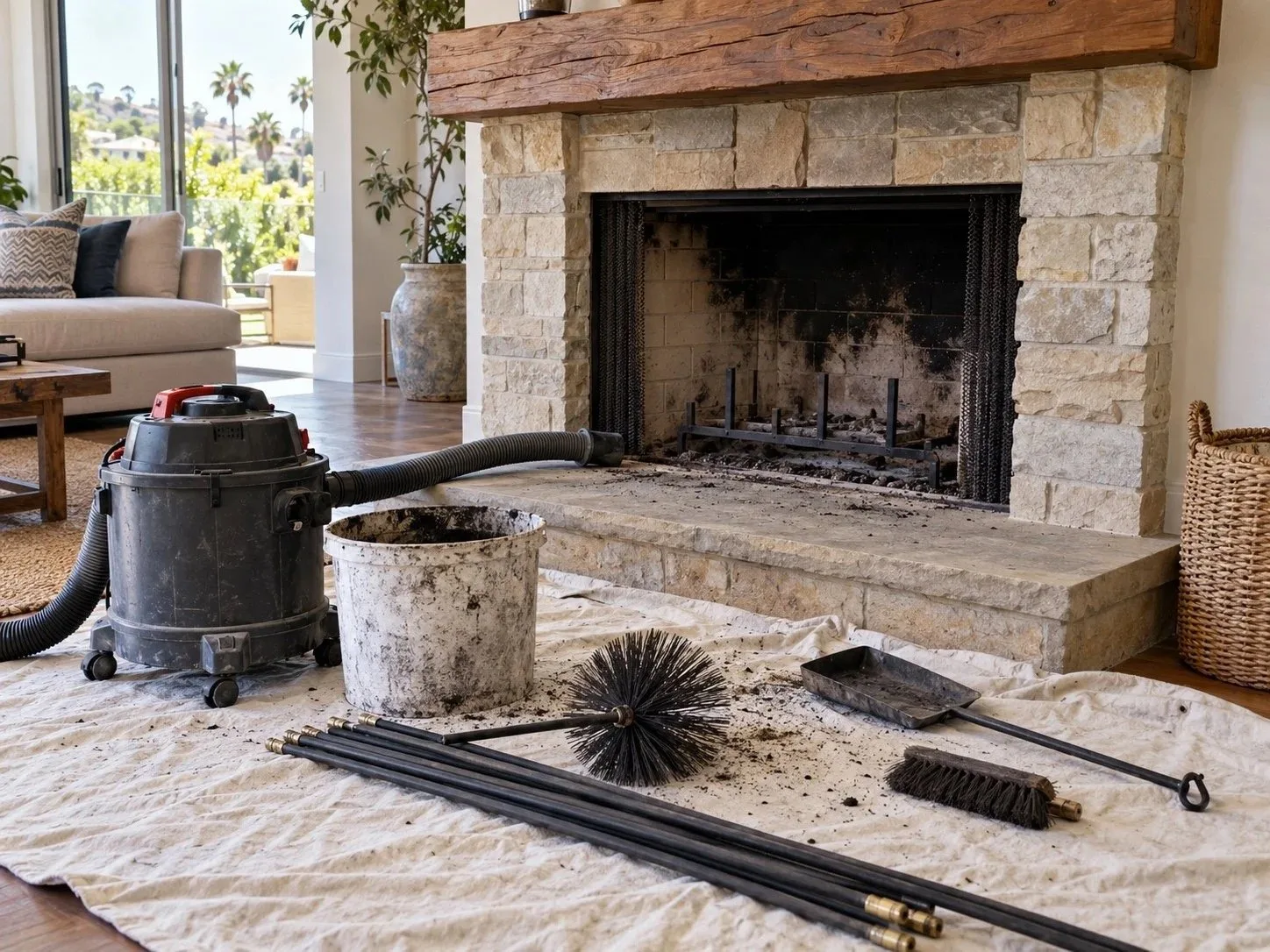
A cap does not fix a cracked crown or bad flashing, though, so the full check matters. If you also have a wood fireplace, pair the repair with a sweep and inspection. The chimney cleaning visit gives the technician a good look at the flue while they are there, and our chimney cleaning guide explains how often to schedule it.
What should I ask for when I call?
A few requests make the visit more useful:
- A written quote before any work starts, with the cap, crown, flashing and masonry listed as separate items.
- Photos of what was found, so you can see the cracks, rust or gaps yourself.
- An explanation of which part is the likely source of the water, and what happens if you wait.
- A license number. Ours is CSLB #1154105.
Our HVAC maintenance checklist for Los Angeles homeowners covers the other seasonal checks for the house.
Common questions
Is a chimney leaking when it rains an emergency?
A few drops in the firebox can wait for a visit, but water running through a ceiling, a wet light fixture or sagging drywall is urgent. Turn off power to anything getting wet and call right away.
Can I use my fireplace if the chimney leaked?
Hold off until someone has inspected it. Water can hide damage in the flue and the masonry. An inspection tells you whether it is safe to light again.
Will a new chimney cap stop the leak?
A cap stops the rain that comes in through the top of the flue. If the leak comes from the crown, the flashing or the masonry, those parts need their own repair. The inspection is how you find out which one it is.
How do I tell condensation from a rain leak?
Condensation comes from flue gases condensing inside a cool chimney, so it can appear on dry days after the heater or fireplace has run. A rain leak shows up during or after a storm.
How often should I have my chimney checked before winter?
Have your chimney checked once a year, ideally before the rainy season starts. CSIA follows NFPA 211 in recommending a yearly inspection, and the check should include the cap, crown and flashing as well as the flue.
Get the leak found before the next storm
Cool Breeze LA serves Los Angeles County and the San Fernando Valley with same day service and a written quote before work starts, and we are licensed under CSLB #1154105. We are open 24 hours Sunday to Thursday and Friday from 9 AM to 3 PM, and closed Saturday. Call (310) 469-1979 or schedule online.