Your fireplace is safe to use for holiday guests if the chimney was swept and inspected in the last 12 months, the damper opens fully, nothing is nesting in the flue, and you have a working carbon monoxide alarm. If any of those is a "no" or "not sure", get the chimney looked at before the first fire. In Los Angeles there is one more check: on South Coast AQMD No-Burn days you cannot burn wood at all, so look up the day before you build a fire.
If it has been more than a year, start with our chimney cleaning in Los Angeles page.
Why the holidays are when fireplace problems show up
Most LA fireplaces sit unused from March to November. In that time birds and squirrels move into uncapped flues, leaves pile up on the smoke shelf, and the first rain of the season finds any crack in the crown. Then the house fills with family, someone lights a fire for the first time in eight months, and the room fills with smoke.
Guests add their own risk. More people means more coats on chairs near the hearth, kids close to the screen, and the fire burning later into the night. That is why the U.S. Fire Administration says to have your chimney inspected and cleaned every year by a professional and to keep anything that can burn at least 3 feet from the fireplace (U.S. Fire Administration, heating fire safety).
Want a straight answer on your system?Most repairs can be estimated free over the phone. Open 24 hours Sunday to Thursday, Friday 9 AM to 3 PM.
Call (310) 469-1979The 10-minute check you can do yourself
None of this replaces a sweep, but it tells you whether you can light a fire tonight or should call first.
- Open the damper and look up with a flashlight. You should see daylight or the cap screen. Twigs, leaves or a nest mean no fire until it is cleared.
- Look at the walls of the firebox and the flue you can see. A thin layer of soft black soot is normal. Shiny black glaze, or black flakes that look like burnt cereal, is creosote, and that is what burns in a chimney fire.
- Smell the room. A strong campfire smell when the fireplace is cold usually means creosote in the flue, often worse on warm days.
- Check the screen or glass doors. USFA advises a glass or metal screen in front of the fireplace so sparks and embers stay in.
- Test your carbon monoxide alarms. USFA says to put them outside each sleeping area and on every level of the home (USFA, carbon monoxide safety). With a full house, that matters more than usual.
- Look at the top of the chimney from the yard. A missing cap, rust streaks down the side, or loose bricks are worth a call before a fire.
Can I use my fireplace on a No-Burn day in Los Angeles?
Not if it burns wood. South Coast AQMD runs its Check Before You Burn season from November through the end of February. On a No-Burn day there is a 24‑hour ban on burning wood in fireplaces, wood stoves and outdoor fire pits across the South Coast Air Basin, which covers most of Los Angeles County (South Coast AQMD, Check Before You Burn).
Gas fireplaces are exempt, so a gas insert or gas logs can still be used on those days. Homes above 3,000 feet and homes that rely on wood as the only heat source are also exempt.
The number of No-Burn days changes a lot from year to year. AQMD's own season reports list 35 No-Burn days in the 2021-22 season and 8 in 2023-24. You can check the day on the AQMD burn map, in the South Coast AQMD app, or by calling 866-966-3293. If you plan a fire for Thanksgiving evening or Christmas Eve, check that morning.
What does a chimney inspection actually look at?
When we sweep a chimney we go through the whole system, not just the part you can see from the hearth:
- Cap and crown: nests, leaves, rust, and cracks that let rain and animals in.
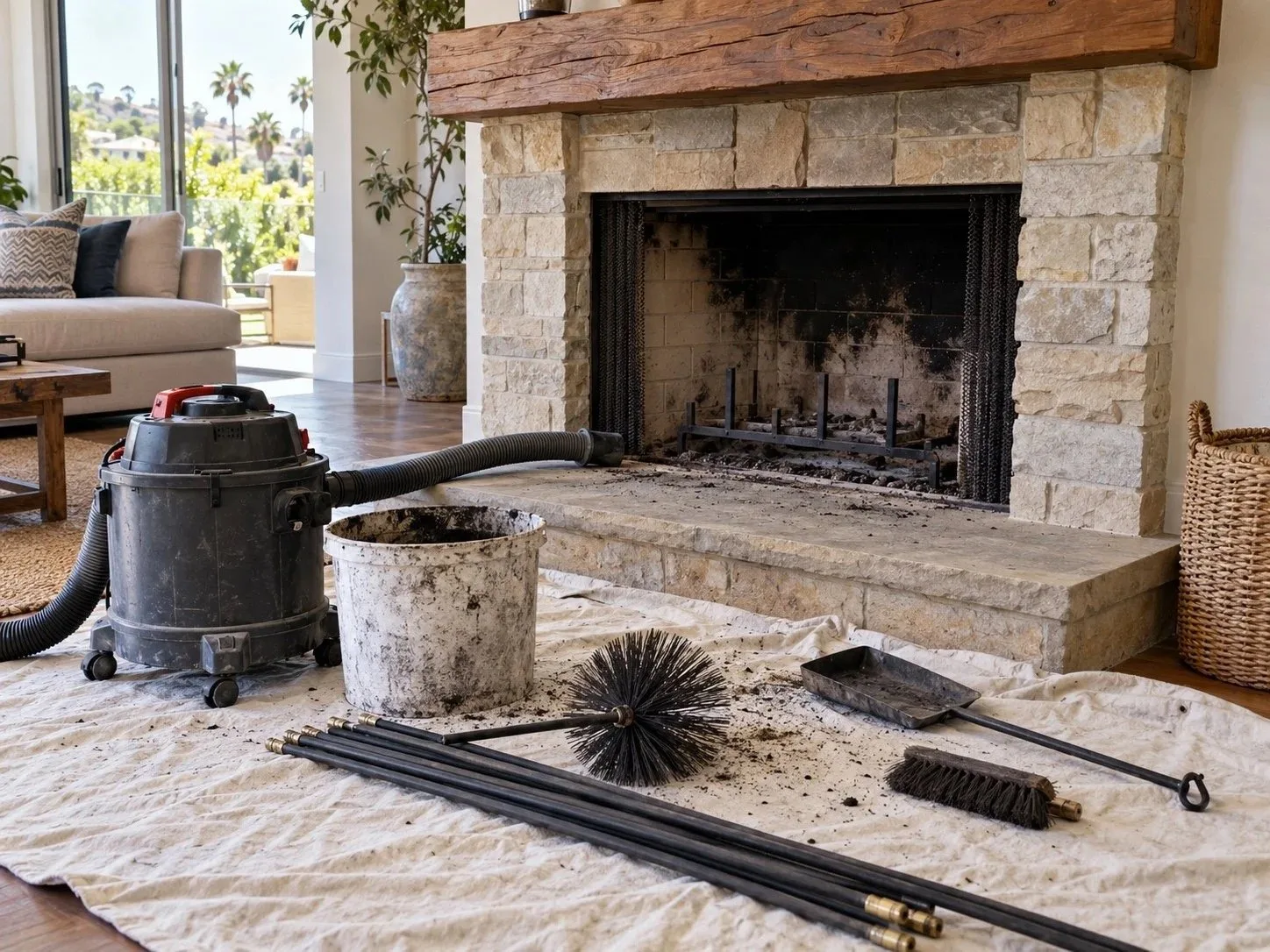
- Flue and liner: soot and creosote, brushed from top to bottom with the debris pulled into a HEPA vacuum.
- Smoke chamber and shelf: the area just above the damper where thick creosote hides.
- Damper: whether it opens, closes and seals.
- Firebox: cracked firebrick or loose mortar.
- Flashing and chase cover: where most chimney leaks start, especially after the first rains.
We lay drop cloths, use HEPA vacuums, and show you before and after photos so you can see what came out of the flue.
After an earthquake, check before the next fire
This is the Los Angeles part most checklists leave out. Masonry chimneys are stiff and heavy, and shaking can crack the crown, loosen bricks at the roofline, or crack a clay liner where you cannot see it from inside. A cracked liner lets heat and smoke reach the wood framing around the chimney.
If you felt a quake since your last fire, or you see new cracks, gaps between the chimney and the house, or bricks on the roof, have it looked at before you light it. Do not wait for the holiday rush to find out.
Wood or gas: what changes
A gas fireplace does not make creosote, but it still needs attention. The vent can be blocked by nests, the glass can build up a white film, and a gas log set that has been moved or cleaned can sit wrong and burn dirty. We clean both wood and gas fireplaces. If you only light a fire a few times a year for guests and keep running into No-Burn days, a gas insert is worth asking about.
Safe fire habits with a full house
- Burn dry, seasoned firewood only. Wet wood smokes and builds creosote faster.
- Do not burn wrapping paper, cardboard boxes or the tree. USFA advises against burning paper in the fireplace.
- Keep the screen closed and kids and pets back from the hearth.
- Put the fire out before everyone goes to bed or leaves the house.
- Put ashes in a metal container with a lid and set it outside at least 10 feet from the house. Ashes can stay hot for days.
The USFA's fireplace and wood stove safety card has these tips on one page if you want to print it for the mantel.
When to book
If your last sweep was more than a year ago, book it now and not the week of the party. Our own advice is the same as on our chimney page: early fall is the best time in Los Angeles, but a sweep in late November still gets you ready for Christmas, New Year's and the rest of the season.
If you see water near the fireplace after rain, that is a separate problem. Read chimney leaking when it rains, and if the cap is missing or rusted, see chimney cap installation. For how often to sweep in general, see how often you should have your chimney cleaned in LA.
Winter guests also notice dusty air from the vents. If the heater blows dust or smells when it kicks on, our air duct cleaning page explains what we check.
Call (310) 469-1979 to book a chimney sweep and inspection. We are open 24 hours Sunday through Thursday, Friday 9 AM to 3 PM, closed Saturday, and we serve Los Angeles County and the San Fernando Valley. CSLB #1154105.
Common questions
How do I know if my fireplace is safe to use?
A fireplace is safe to use when it was swept and inspected in the last year, the damper opens, the flue is clear when you look up with a flashlight, there is no shiny black creosote, and your carbon monoxide alarms work. If you are not sure about any of these, have it inspected first.
How often should a chimney be inspected?
A chimney should be inspected once a year. The U.S. Fire Administration recommends a yearly inspection and cleaning by a professional.
Can I burn wood in my fireplace in Los Angeles in winter?
You can burn wood in a Los Angeles fireplace in winter, except on South Coast AQMD No-Burn days, which can be called from November through the end of February. On those days wood burning is banned for 24 hours. Gas fireplaces are exempt.
Is it safe to use my fireplace after an earthquake?
Do not use a fireplace after an earthquake until it is checked. Shaking can crack the crown or the flue liner where you cannot see it. Look for loose bricks or new cracks and have the chimney inspected before the next fire.
Why does my house smell like smoke when the fireplace is not in use?
A smoke smell when the fireplace is not in use usually comes from creosote in the flue, often worse on warm days or when the house pulls air down the chimney. A sweep removes the buildup that causes the smell.
Do gas fireplaces need cleaning?
Gas fireplaces need cleaning. They do not make creosote, but the vent can get blocked, the glass builds up a film, and the logs need to sit correctly to burn clean.