The right size for a new air conditioner in Los Angeles comes from a load calculation of your home, called ACCA Manual J, not from the square footage alone or the size of the old unit. The U.S. Department of Energy says your contractor should use Manual J to calculate the proper size of HVAC equipment, and that is how Cool Breeze LA sizes every system before we quote it. This guide explains what goes into that number, why too big is as bad as too small, and what to check on any installation quote.
If you are already replacing a system, see our AC installation service in Los Angeles.
What size AC do I need for my house?
Air conditioners are sized in tons of cooling. One ton equals 12,000 BTU per hour, so a 3 ton system moves 36,000 BTU of heat out of the house every hour. The number your home needs is its cooling load: how much heat comes in on a hot afternoon through the roof, walls, windows, ducts, air leaks, and the people and appliances inside.
Two houses with the same square footage can need very different systems. A well insulated house with shade trees in Pasadena and a house with a big west facing window wall in the Valley do not have the same load. That is why square footage charts only give a rough starting range, and why the size printed on your old unit is not proof of anything. It may have been wrong the day it went in, and the house may have changed since then with new windows, more insulation, or an added room.
Want a straight answer on your system?Most repairs can be estimated free over the phone. Open 24 hours Sunday to Thursday, Friday 9 AM to 3 PM.
Call (310) 469-1979What is a Manual J load calculation?
Manual J is the residential load calculation standard published by the Air Conditioning Contractors of America (ACCA). ACCA describes it as the national ANSI recognized standard for producing HVAC equipment sizing loads for single family homes, condos, townhouses, and small multi unit buildings, and says a proper load calculation is required by national building codes and most state and local jurisdictions.
A Manual J calculation works through the house piece by piece. It looks at:
Walls, roof and attic. How much insulation there is and how much sun hits each surface.
Windows and doors. Their size, glass type, shading, and which way they face. West facing glass is a big load in Los Angeles afternoons.
Air leaks. Outside air that slips in through gaps adds heat and moisture.
Ducts. Ducts in a hot attic pick up heat before the air reaches the room, and leaky ducts lose cooled air.
People and appliances. Everyone at home and every running appliance adds heat.
Local weather. The calculation uses design temperatures for your area, so a Woodland Hills house and a Santa Monica house come out differently.
The result is a cooling load in BTU per hour. Equipment is then chosen to match that load, and the ducts are checked to make sure they can carry the air the new system needs.
Is a bigger air conditioner better?
No. A system that is too big cools the air fast, reaches the thermostat setting, and shuts off before it has run long enough to pull moisture out of the air. That on and off pattern is called short cycling. The house can feel cold and clammy at the same time, the parts wear faster from constant starts, and rooms far from the thermostat may never even out.
The Department of Energy is direct about it in its consumer guide to home heating and cooling: oversized cooling systems can cost too much, provide inadequate comfort, and lead to mold and poor indoor air quality. A bigger unit also costs more to buy, and it may need bigger electrical service and wider ducts to work properly.
What happens if the AC is too small?
An undersized system runs nonstop on the hottest days and still cannot hold the temperature you set. Bills climb, the compressor works at full load for hours, and the upstairs or the rooms with afternoon sun stay warm. In a heat wave, that is the house that calls for help first.
The goal is a system matched to the load, with enough capacity for a normal hot Los Angeles day and long enough run times to keep humidity down.
Why the old unit size can be the wrong answer
Matching the old unit is the most common shortcut in AC replacement, and it repeats any mistake that was made before. We see three situations again and again across Los Angeles:
The house changed. New dual pane windows, added attic insulation, or sealed ducts can lower the load, so the same size is now too big.
The house grew. A converted garage or a room addition adds load, and the old size is now too small for the whole home.
The first install was a guess. Many older systems were sized by rule of thumb. If some rooms never cooled, the size or the ducts were wrong from the start.
A load calculation settles it with measurements instead of habit.
Should I get a heat pump instead of a straight AC?
Often, yes, in Los Angeles. A heat pump cools in summer and heats in winter with the same outdoor unit, and our mild winters let it heat well. The sizing work is the same: the load calculation sets the capacity for cooling, and the heating load is checked too. If both your AC and furnace are old, ask for a heat pump quote next to a standard AC and furnace.
For homes without ducts, or for one room that never cools, ductless mini splits are sized room by room in the same way.
Still deciding between the two? Read heat pump vs central AC in Los Angeles.
Do the ducts matter when sizing a new AC?
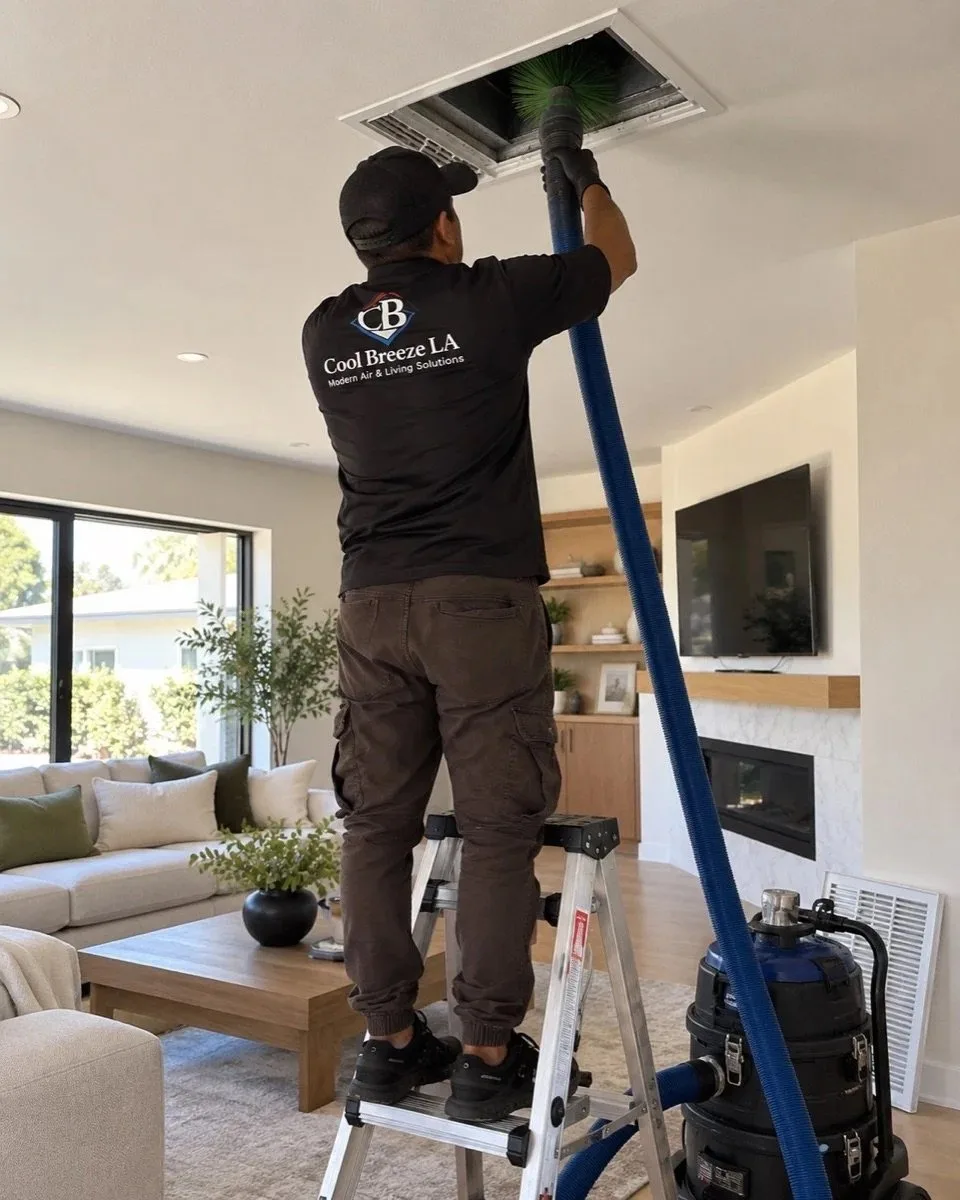
Yes. A new system can only deliver what the ducts can carry. If the ducts are too small, leaky, or crushed in the attic, a correctly sized unit still leaves rooms warm and runs loud. The DOE guide notes that sealing ducts with fiberglass mesh and mastic can control humidity and dust. That is why we inspect the ducts during the free assessment and include any duct fixes in the written quote, so you can see them before you agree to anything.
How we size a new system at Cool Breeze LA
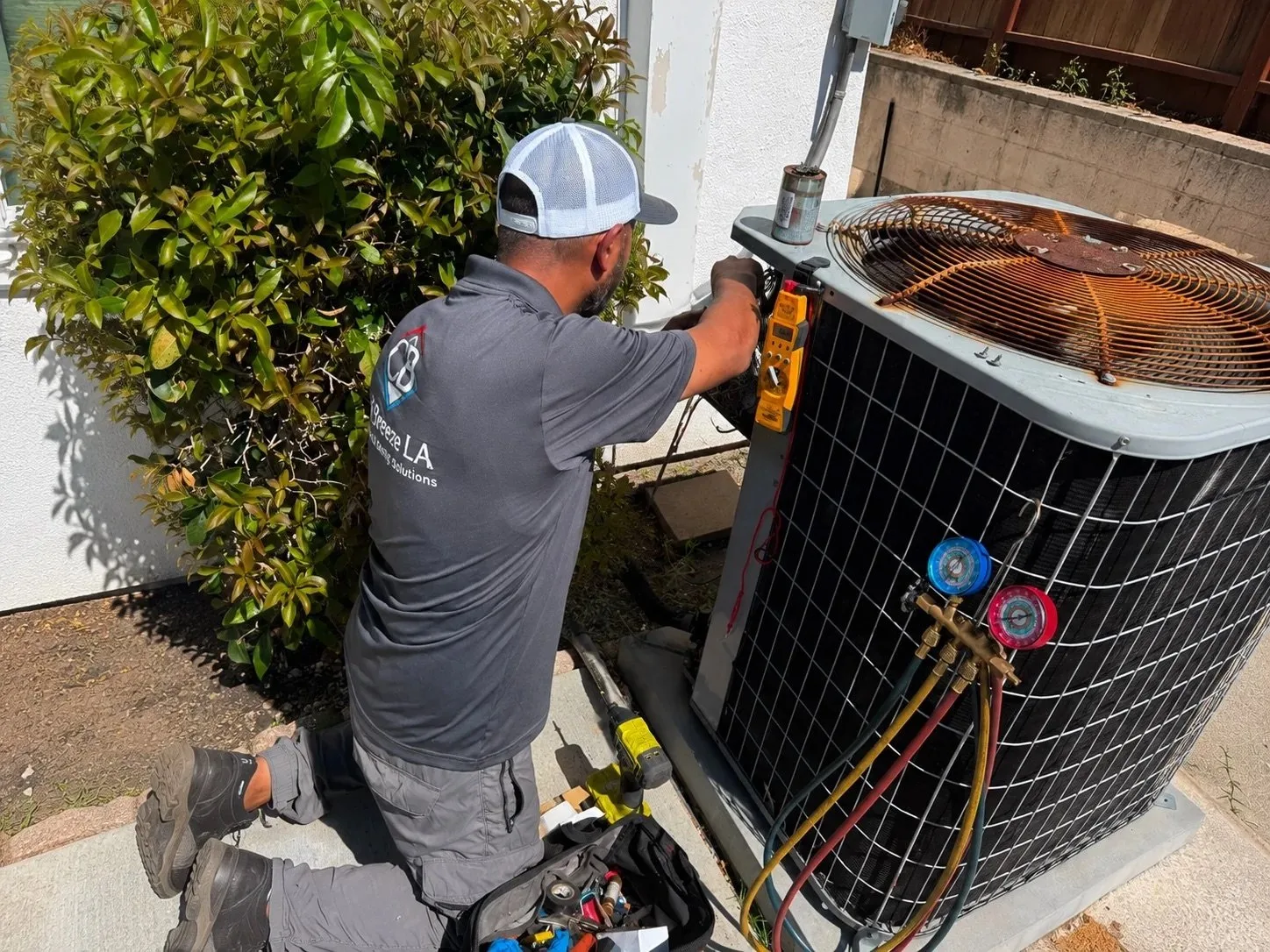
Every installation starts with a free in home assessment. We measure the house room by room, look at the windows, insulation, and attic, check the ducts and the electrical panel, and run the load calculation. Then you get a written price for a system sized to your home, with the equipment named. We install Carrier, Trane, Lennox, Rheem, and Daikin systems, pull the permit, and meet the inspector, because a new central system in California needs both. For a look at what drives the total price, read our guide to new central AC cost in Los Angeles.
What to check on an AC installation quote
The size and the reason for it. The quote should name the tonnage and say it came from a load calculation. Ask to see the summary.
Model numbers. The outdoor unit, the indoor coil, and the air handler or furnace should all be listed so you know they are a matched set.
Ducts. Whether they were inspected, and what repairs or changes are included.
Electrical work. Whether a new breaker or disconnect is needed and included.
Permit and inspection. Who pulls the permit and whether the required testing is in the price.
A quote that only says "replace 3 ton unit with 3 ton unit" skipped the sizing step. It is fair to ask why.
Thinking about a new air conditioner or heat pump? Call Cool Breeze LA at (310) 469-1979 to book a free installation assessment. We are open 24 hours Sunday through Thursday and 9 AM to 3 PM on Friday, closed Saturday. Licensed in California, CSLB #1154105. We serve Los Angeles and nearby cities like Calabasas, Burbank, Glendale, Pasadena, and Sherman Oaks.
Common questions
How do I know what size AC my house needs?
From a Manual J load calculation of your home. It accounts for insulation, windows, sun exposure, air leaks, ducts, and local weather. Square footage alone only gives a rough range.
Can I just replace my AC with the same size?
You can, but it repeats any sizing mistake from the first install and ignores changes to the house since then. A load calculation shows whether the old size is still right.
What happens if my air conditioner is too big?
An air conditioner that is too big short cycles: it cools fast, shuts off, and does not run long enough to remove humidity. The DOE says oversized systems can cost too much, provide inadequate comfort, and lead to mold and poor indoor air quality.
How many BTU is a ton of air conditioning?
One ton of cooling equals 12,000 BTU per hour. A 4 ton system is 48,000 BTU per hour.
Does a load calculation cost extra?
A load calculation costs nothing extra at Cool Breeze LA. The load calculation is part of our free installation assessment, and you get a written price before any work starts.
Is a heat pump sized the same way as an AC?
A heat pump is sized the same way as an AC. The same load calculation sets the cooling capacity, and the heating load is checked too. In Los Angeles a heat pump sized for cooling usually covers winter heating well, and we confirm it for your home.